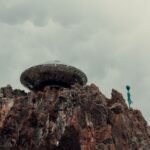
Veteran investigative journalist George Knapp, whose decades of UAP reporting have established him as one of the most credible voices in the field, has recounted in detail a significant conversation with a confidential source who described firsthand knowledge of a recovered non-human craft. The account, shared during Episode 6 of the Weaponized podcast alongside filmmaker Jeremy Corbell, adds another thread to a body of testimony that serious researchers have been tracking for years.
Knapp has long operated at the intersection of sourced intelligence and public disclosure, cultivating relationships within government, military, and contractor communities that few journalists can claim. His willingness to discuss this particular source account publicly suggests a level of confidence in the material, though Knapp, characteristically, stops short of making claims he cannot independently verify. The conversation reflects the painstaking, years-long process of responsible UAP journalism: building trust with sources, corroborating details where possible, and resisting the pressure to overstate what the evidence actually shows.
The exchange is notable not only for its content but for what it illustrates about the broader investigative landscape. Multiple credible individuals, from retired military officers to intelligence community insiders, have provided consistent testimony regarding recovered materials and craft to journalists and congressional staff alike. Knapp’s account represents one more data point in a pattern that serious oversight bodies are now actively examining.
What separates Knapp’s approach from sensationalized UFO reporting is his grounding in institutional accountability structures. Since the establishment of the All-domain Anomaly Resolution Office (AARO) by the Department of Defense in 2022, and following the Congressional UAP Disclosure Act introduced by bipartisan lawmakers, there now exists an official bureaucratic pathway for processing recovered craft claims. This represents a critical shift in how such accounts are handled: previously, claims of recovered technology existed almost entirely outside official channels, confined to anecdotal reports and classified briefings. Now, there is a designated government office with explicit authority to investigate and catalog such incidents.
Yet the gap between classified briefings to Congress and public disclosure remains vast. According to recent House Oversight Committee statements, multiple witnesses have testified to congressional staff about recovered non-human technology, creating a documented record that exists outside traditional media channels. This distinction matters: congressional testimony, even when delivered behind closed doors, creates an official government record that differs fundamentally from journalist accounts, however credible those journalists may be.
As official inquiries continue and more witnesses consider coming forward under the protections afforded by recent whistleblower legislation, the question of institutional accountability grows more urgent: if recovered craft accounts have been shared with journalists for decades, corroborated through multiple independent sources, and now formally documented in congressional testimony, what does it mean that formal government acknowledgment at the public level has still not followed?
Source: Jeremy Corbell